
It is 4:15 PM on a Tuesday. Your inbox has seventeen unread threads, your lunch feels like a distant memory, and your brain is quietly begging for a packet of masala chips or a sugar-loaded biscuit from the office pantry.
We have all been there. The mid-afternoon slump is rarely a willpower problem—it is usually a blood-sugar and protein problem. Most grab-and-go vegetarian snacks in India are heavily skewed toward refined flour, palm oil, and fast-digesting carbs. They give you a twenty-minute dopamine spike followed by a heavy energy crash right before your last meeting of the day.
To find out what actually holds up during a chaotic workday, we evaluated dozens of everyday pantry staples, fridge-friendly options, and modern desk snacks across four strict criteria: protein density per realistic serving, ingredient cleanliness (zero hidden sugar bombs or artificial fillers), desk practicality (smell, mess, and storage), and actual taste—because nobody sticks to a healthy snack that tastes like cardboard.
Here are the 7 best protein-rich vegetarian snacks for busy workdays, ranked in reverse order from #7 down to our #1 overall winner.
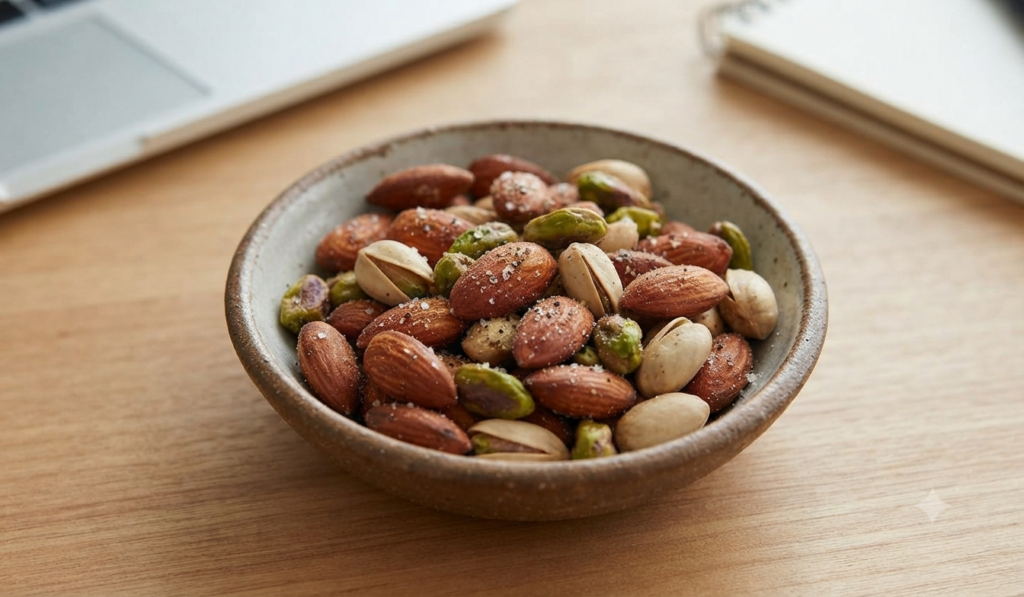
#7. Roasted Almonds and Pistachios (The Zero-Prep Desk Drawer Anchor)
Protein per serving: ~6g per 30g handful
Best for: Back-to-back calls when you cannot leave your chair
Storage: Shelf-stable at room temperature
Let’s start with the most effortless option you can keep within arm’s reach. While nuts are often treated purely as a source of healthy fats, lightly roasted almonds and pistachios pull serious weight when you need sustained focus without chewing through a full meal. Pistachios in particular punch above their weight—a 30-gram serving delivers roughly 6 grams of complete protein alongside lower calorie density than most other nuts, while almonds pair 6 grams of protein with about 3.5 grams of dietary fibre to slow digestion down.
The Taste & Ingredient Verdict
Plain, unseasoned raw nuts tend to sit untouched in desk drawers for months because eating them feels like a chore. During our testing, lightly dry-roasted almonds with a pinch of rock salt or cracked black pepper were consistently finished, whereas oil-roasted commercial packs left greasy residue on keyboards and carried unnecessary sodium.
- What to look for on the label: Dry-roasted or air-roasted nuts with only two ingredients—the nut itself and rock salt. Skip honey-roasted or “masala coated” mixes that sneak in sugar, maltodextrin, and refined vegetable oils.
- The catch: Because nuts are energy-dense, mindless munching straight from a 250-gram jar can quietly add 400+ calories before 5 PM. Portion them into small 30-gram containers or single-serve pouches before your week starts.
#6. Sprouted Moong Dal Chaat (The High-Volume Crunch)
Protein per serving: ~7g to 8g per 150g bowl
Best for: Work-from-home afternoons or office lunches with a breakroom fridge
Storage: Needs refrigeration; best eaten fresh
If your evening cravings are driven by wanting a large bowl of something crunchy, tangy, and genuinely filling rather than a tiny handful of nuts, sprouted green moong is hard to beat. Sprouting breaks down antinutrients, improves protein digestibility, and gives whole moong a crisp, snappy texture that mimics street-style bhel when tossed with chopped cucumber, tomatoes, lemon juice, and chaat masala.
The Taste & Ingredient Verdict
Straight raw sprouts can taste grassy and slightly bitter. Steaming them for just two to three minutes—or tossing them in a hot pan with a drop of ghee, cumin seeds, and turmeric—transforms the flavour completely while keeping the crunch intact. It tastes fresh, bright, and clean, without the heavy oil hangover of fried namkeen.
- What to look for (and a food-safety note): If you buy pre-sprouted packs, rinse them thoroughly and lightly steam or sauté them rather than eating them completely raw, as raw sprouts stored at warm temperatures can harbour bacteria.
- The catch: Chopped onions and chaat masala are wonderful for your taste buds, less wonderful for a cramped conference room. Keep this one for home-office days or open breakrooms.
#5. Natural Peanut Butter on Whole-Grain Rice Cakes (The Sweet-Craving Fix)
Protein per serving: ~10g to 12g (2 tablespoons peanut butter + 2 rice cakes)
Best for: Beating the 4 PM sweet tooth without touching biscuits or pastries
Storage: Shelf-stable; takes 45 seconds to assemble
When your brain is demanding something creamy, rich, and slightly sweet alongside your afternoon coffee, natural peanut butter smeared over crisp brown-rice cakes hits every sensory trigger without spiking your blood sugar. Two level tablespoons of unsweetened peanut butter deliver roughly 7 to 8 grams of protein, and pairing them with sturdy whole-grain rice cakes adds crunch plus another 2 to 3 grams.
The Taste & Ingredient Verdict
Texture is everything here. Thin, papery rice cakes turn soggy within seconds, while thicker multi-grain cakes hold up nicely against a generous layer of crunchy peanut butter. Adding three or four thin banana slices or a light sprinkle of cinnamon makes it taste remarkably close to dessert.
- What to look for on the label: Flip the jar around. The ingredient list should read “100% Roasted Peanuts” (and optionally a pinch of salt). Many mainstream jars hide hydrogenated palm oil and up to 15% added sugar—turning a solid protein snack into glorified frosting.
- The catch: Oil separation on top of natural peanut butter is normal, not spoilage. Stir it thoroughly once when you open the jar, and keep a spoon in your desk kit.
#4. Spiced Roasted Chana & Edamame Mix (The Ultimate Desk Crunch)
Protein per serving: ~9g to 11g per 40g serving
Best for: Replacing fried bhujia, sev, and potato chips at your desk
Storage: Completely shelf-stable for weeks
If you miss the loud, satisfying crunch of traditional Indian namkeen while working through spreadsheets, a 50/50 blend of classic roasted Bengal gram (chana) and dry-roasted edamame (young soybeans) is an absolute game-changer. Roasted chana brings roughly 19 grams of protein per 100 grams along with hearty fibre, while roasted edamame steps in with complete soy protein and an ultra-crisp, airy bite.
The Taste & Ingredient Verdict
Classic salted roasted chana is reliable, affordable, and pairs naturally with afternoon chai. On its own, though, chana can feel slightly dry after a dozen bites. Mixing it with lightly seasoned roasted edamame—flavoured with sea salt, black pepper, or mild peri-peri—solves the dryness problem and creates a snack mix you actually look forward to opening.
- What to look for on the label: Check the sodium line and roasting method. Look for dry-roasted or puff-roasted packs rather than deep-fried soybean snacks, and verify that soy allergens are noted if you share snacks with colleagues.
- The catch: Drink a full glass of water alongside it. High-fibre roasted legumes absorb moisture quickly, and staying hydrated keeps you feeling comfortably full until dinner.
#3. Crispy Dehydrated Tempeh Bites or Seasoned Tofu Cubes (The Savoury Heavyweight)
Protein per serving: ~12g to 15g per 60g–75g serving
Best for: Long workdays when dinner is still three or four hours away
Storage: Dehydrated tempeh is shelf-stable; pan-seared tofu needs a lunchbox
Soy-based snacks have come a long way from bland, spongy blocks. Fermented tempeh—made from whole cooked soybeans bound together into a firm cake—packs around 19 to 20 grams of complete protein per 100 grams, along with gut-friendly fermentation benefits and a nutty, earthy bite. Dehydrated tempeh bites need zero refrigeration and crunch like gourmet crackers, while firm tofu cubed and air-fried with peri-peri or tikka spices makes a deeply satisfying warm snack.
The Taste & Ingredient Verdict
Unlike plain tofu, which relies entirely on its marinade for flavour, tempeh has a rich, savory depth similar to roasted mushrooms or toasted nuts. Thinly sliced, crisp-baked tempeh seasoned with chilli-garlic or black pepper outperformed almost every packaged savoury chip in our blind taste checks.
- What to look for on the label: Choose minimally processed tempeh made from whole non-GMO soybeans, water, and starter culture (Rhizopus), without heavy cornstarch coatings or artificial flavour enhancers.
- The catch: If you are new to fermented foods, start with a bold flavour like chilli-garlic or smoked paprika rather than unseasoned raw tempeh.
#2. Tawa-Toasted Masala Paneer Bites (The Warm, Comforting Classic)
Protein per serving: ~11g to 13g per 60g–70g serving
Best for: Afternoon hunger pangs that feel closer to a mini-meal
Storage: Needs refrigeration or an insulated tiffin box
Sometimes a handful of dry crunch simply will not cut it—you want real, substantial food that feels warm and comforting. Sixty to seventy grams of fresh paneer cubed and seared on a dry non-stick tawa (or air-fried for six minutes) with crushed black pepper, cumin, and chaat masala delivers roughly 11 to 13 grams of slow-digesting dairy protein. Because casein protein digests gradually, it keeps hunger quiet for hours rather than minutes.
The Taste & Ingredient Verdict
Cold paneer straight from a packet can feel rubbery, which is why five minutes of high-heat searing makes all the difference. Developing a golden, slightly crisp crust on the outside while keeping the centre soft and milky turns basic cottage cheese into something that rivals restaurant paneer tikka—without heavy cream or excess oil.
- What to look for on the label: Check that your paneer is made from pure milk and citric acid/vinegar without added vegetable fats (“analogue paneer” uses palm oil instead of milk fat and lacks the same nutritional profile). If you watch saturated fat closely, opt for low-fat paneer.
- The catch: Paneer is perishable. Pack it in an insulated container if you commute, and consume it within four to five hours if kept outside a fridge.
#1. Thick Greek Yogurt / Hung Curd Chaat Cup (Our #1 Overall Winner)
Protein per serving: ~12g to 15g per 150g cup
Best for: Maximum protein-per-calorie, gut health, and endless sweet or savoury versatility
Storage: Office fridge or insulated chiller bag
Taking the top spot on our list is the simplest, cleanest, and most versatile high-protein snack a vegetarian can keep on rotation: unsweetened strained Greek yogurt or traditional hung curd (chakka dahi). A standard 150-gram cup packs between 12 and 15 grams of complete, highly bioavailable protein—roughly double the protein of regular unstrained dahi—for around 110 to 140 calories.
Why It Won #1 in Both Taste and Ingredients
Most high-protein snacks force a trade-off: either they are high in calories (nuts and nut butters), require cooking (paneer and chillas), or feel dry by the end of the bowl (roasted grains). Strained Greek yogurt has none of those drawbacks. Its thick, velvety texture feels genuinely indulgent, and it acts as a blank canvas that adapts to whatever your workday mood demands:
- The 60-Second Savoury Chaat Cup: Stir in a pinch of roasted cumin powder, black salt, finely diced cucumber, and a teaspoon of green mint chutney. It tastes cool, tangy, and refreshing on a stressful afternoon.
- The 60-Second Sweet Parfait Cup: Swirl in a spoonful of chia or pumpkin seeds, a few berries or pomegranate pearls, and a dash of cinnamon.
What to Look for on the Label
Be careful in the supermarket aisle—many “flavoured Greek yogurts” pack 14 to 18 grams of added sugar per cup, which completely defeats the purpose of a steady-energy workday snack. Always buy plain, unsweetened Greek yogurt with just two ingredients: pasteurised milk and live active cultures.
Side-by-Side Comparison: Choosing Your Workday Backup
| Rank | Snack Option | Protein / Serving | Prep Time | Fridge Needed? | Best Workday Scenario |
| #1 | Plain Greek Yogurt / Hung Curd | 12g – 15g (150g) | 1 min | Yes | Maximum protein, clean energy, sweet or savoury |
| #2 | Tawa-Toasted Masala Paneer | 11g – 13g (65g) | 5 mins | Yes | Heavy afternoon hunger that needs real food |
| #3 | Tempeh Bites / Spiced Tofu | 12g – 15g (70g) | 0–5 mins | No (dehydrated) | Long gaps between lunch and dinner |
| #4 | Roasted Chana & Edamame Mix | 9g – 11g (40g) | 0 mins | No | Crunchy desk munching without greasy fingers |
| #5 | Peanut Butter on Rice Cakes | 10g – 12g (2 cakes) | 1 min | No | Quick coffee-break sweet craving fix |
| #6 | Sprouted Moong Dal Chaat | 7g – 8g (150g) | 5 mins | Yes | Light, high-volume bowl for WFH days |
| #7 | Dry-Roasted Almonds & Pistachios | ~6g (30g) | 0 mins | No | Emergency drawer backup during non-stop calls |
3 Quick Rules Before You Stock Your Desk
- Always check protein per realistic serving, not per 100g: A snack might boast “20g protein per 100g” on the front of the pack, yet a normal handful is only 25 grams—giving you just 5 grams of actual protein.
- Pair incomplete plant proteins across your day: Pulses like chana and moong are wonderfully rich in lysine, while grains and seeds add methionine. You do not need to combine them in the exact same bite; rotating dairy, soy, nuts, and pulses across the week covers every essential amino acid effortlessly.
- Keep one “no-fridge” backup in your bag at all times: Even if you love Greek yogurt or paneer, busy days derail meal prep. Keeping a small airtight jar of roasted chana, edamame, and pistachios in your laptop bag ensures you never get ambushed by the 4 PM vending-machine trap.